

Digital Printer Ink Price Increasing? Here's Why (2026)
If you buy ink for dye-sublimation, DTF or any other digital textile printing process, 2026 has been a stressful year to plan costs. Across Asia, digital printer ink price increasing has become a talking point in almost every B2B conversation — and behind it is something many buyers rarely see: the chemistry.
Ink is not a finished product dropped from a shelf. It is a formulation of dyes, pigments, solvents, resins and additives — almost all of them refined from petrochemical feedstocks. When the upstream chemical chain moves, ink cost moves with it, usually a few weeks later. That is exactly what has been happening since September 2026, and the Hormuz Strait situation is making it worse.
This guide explains what actually drove the 2026 price wave, why volatility (not just inflation) is the real problem, what it means for sublimation and DTF ink buyers, and how to keep your ink budget predictable.
The September 2026 raw-material price wave
The current cycle is not a single product nudging up. It is a synchronized, multi-category increase that started with major chemical producers and worked its way down the chain.
Global majors moved first
In early September, international manufacturers announced broad price adjustments. BASF raised caprolactam, nylon 6 and nylon 6/66 copolymer in North America by 0.08 USD/lb (about 1,197 CNY/ton), and NPG by 250 EUR/ton in Europe and 221 USD/ton in North America — roughly 1,500–1,700 CNY/ton after conversion. Resin makers such as allnex (Suzhou) pushed up its indoor, general-weather and super-weather-resistant resins by 500 CNY/ton from 1 September. Coating leader Sherwin-Williams raised its whole paint-store product range by 8%, and Nanya Plastics lifted copper-clad laminate (CCL) and prepreg (PP) prices by a sharp 20–25%.
Domestic base chemicals climbed across the board
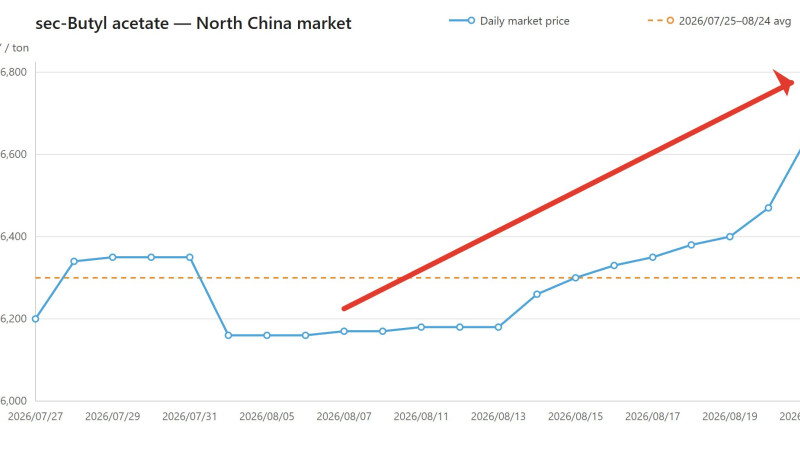
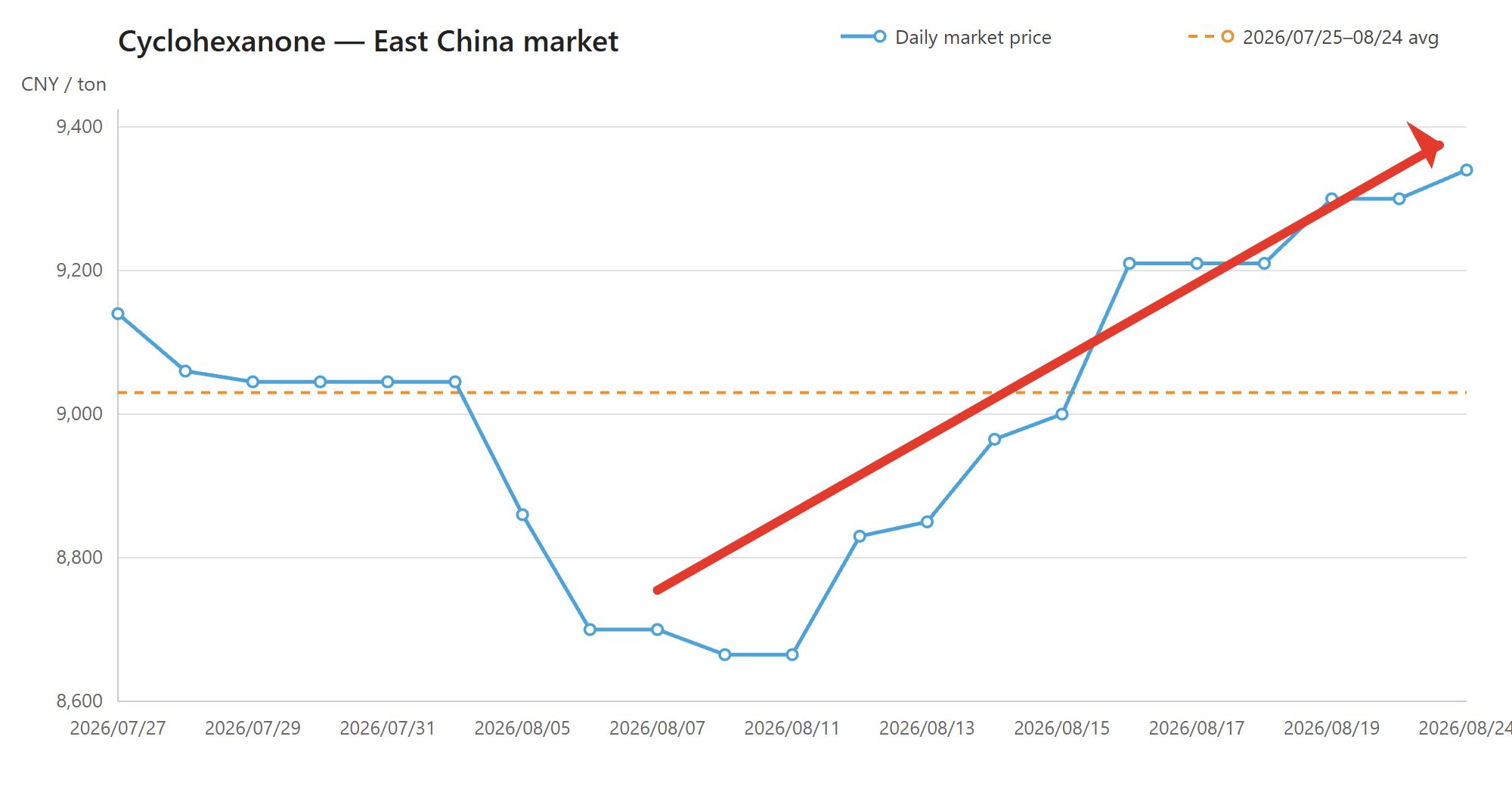
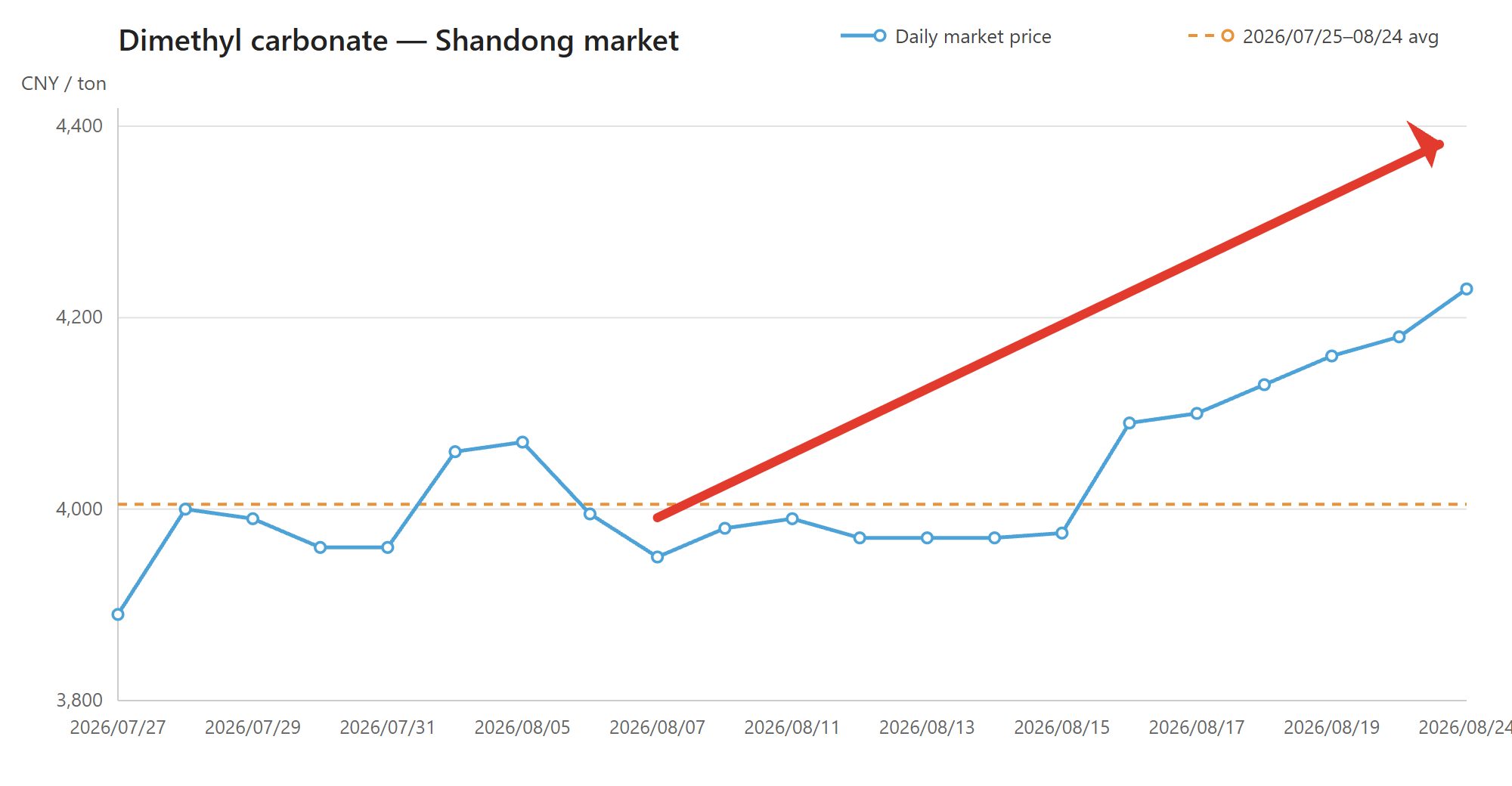
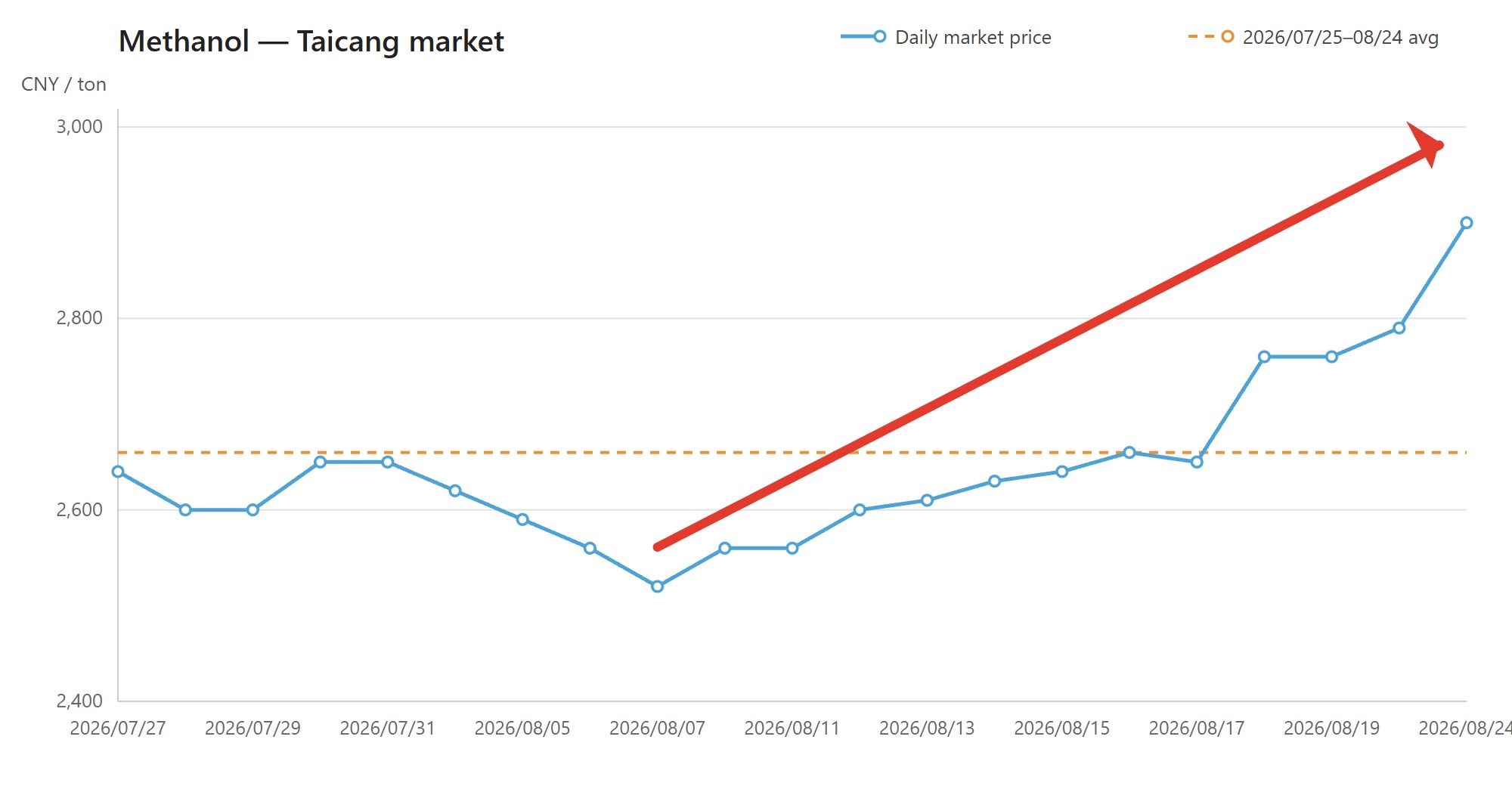
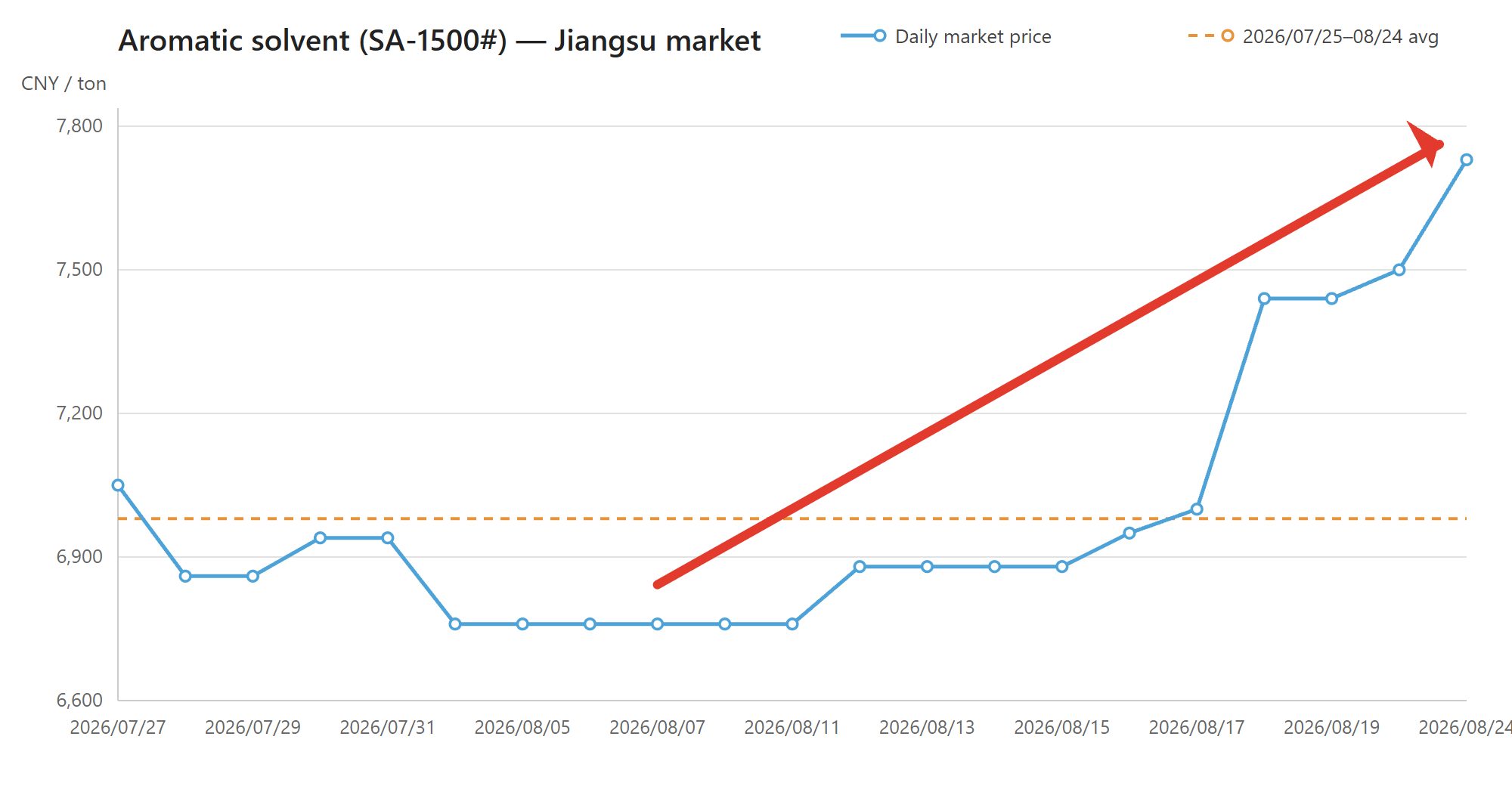
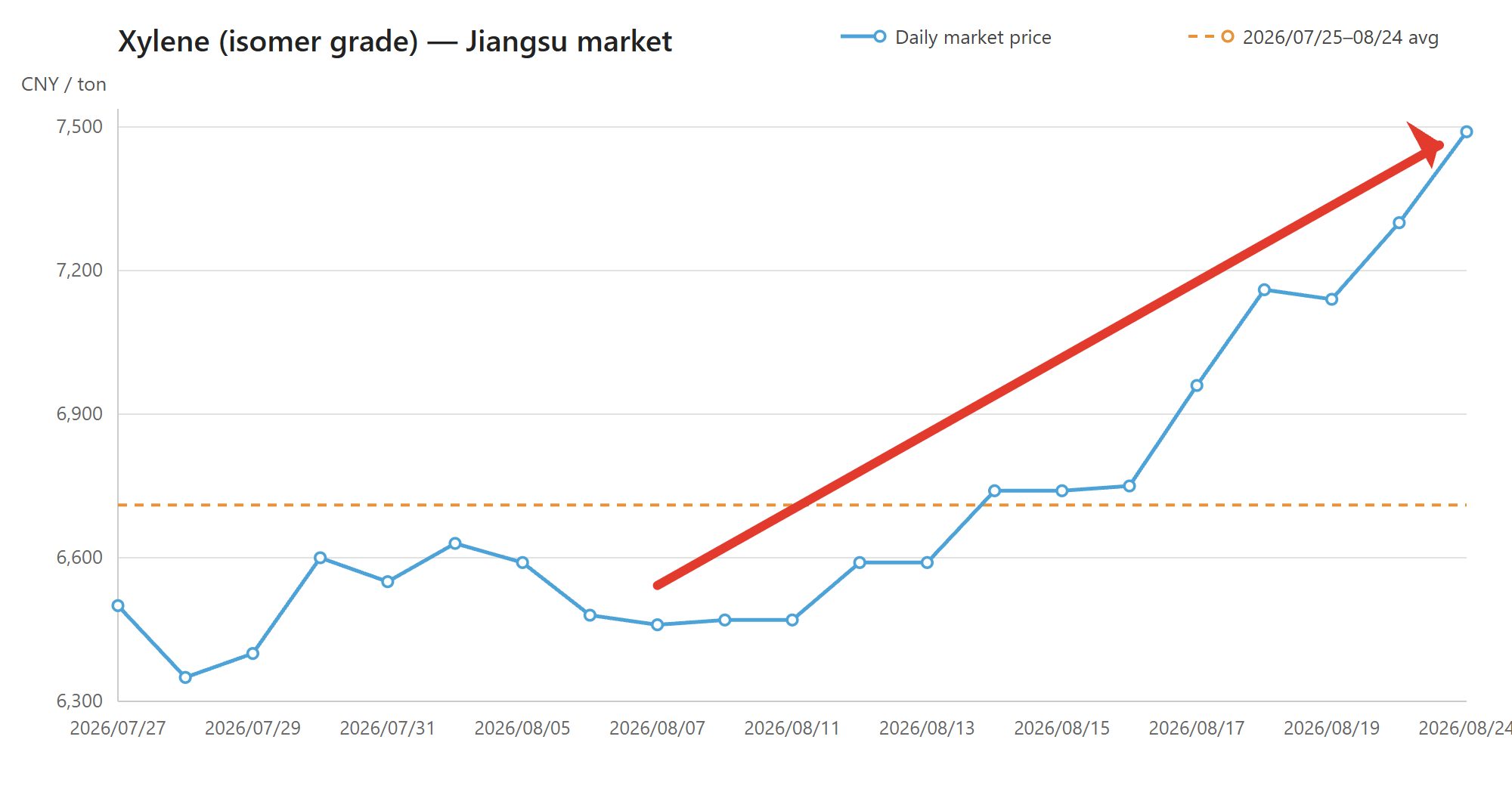
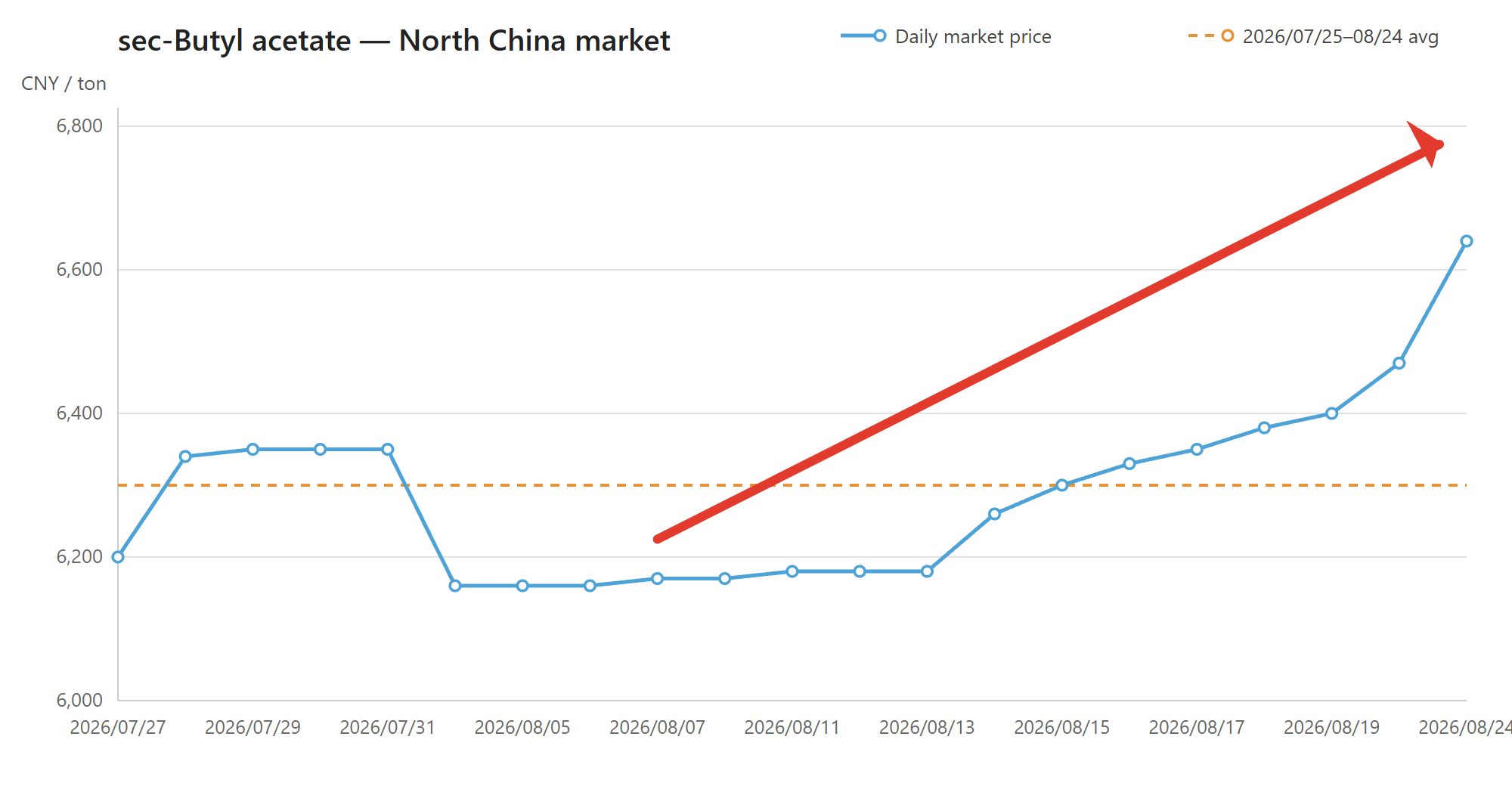
Chinese producers followed. Wanhua Chemical raised butadiene by 180 CNY/ton, MTBE by 50, styrene by 200, n-butanol by 100, acrylic acid by 200 and butyl acrylate by as much as 400 CNY/ton, plus several LDPE grades. Beyond these, cyclohexanone, dimethyl carbonate, isopropanol, methanol, high-boiling aromatic solvents, xylene and sec-butyl acetate all pushed higher across major regional markets.
The charts below show how three of these feedstocks climbed from late July to late August 2026 — the same intermediates that feed dye, resin and solvent production for ink.
Why the Hormuz Strait makes dye prices so volatile
US–Iran tensions and the situation around the Strait of Hormuz are not a background news item here — they are a direct cost driver. A large share of the world's crude oil and refined aromatics ships through that chokepoint. When tanker transits become uncertain, crude and then aromatics (benzene, toluene, xylene) oscillate, and the price signal travels down to solvents and intermediates.
From crude oil to chemical feedstock
The chain is short: crude → aromatics/naphtha → solvents, monomers, polymers → dyes, resins, additives → finished ink. Any pause or spike at the top ripples through. Because shipping lanes are the main transmission route, geopolitics hits the ink cost structure faster and harder than ordinary demand-driven inflation.
Volatility, not just inflation
The challenge for buyers is that prices do not only go up — they swing. A feedstock can jump 150 CNY/ton one week and correct the next, which makes it very hard to price your own finished goods or honor a fixed quote. What you need is not only a lower price today, but a more stable cost basis tomorrow.
What this means for digital printing ink buyers
Ink cost follows feedstock — with a lag
Ink makers buy dyestuff, pigment and solvents in bulk, formulate, grind and fill. That takes weeks, so the September feedstock rise will typically surface in finished ink quotes during Q4. If you have seen digital printer ink price increasing in recent quotes, this is why — and the timing is not accidental.
Sublimation vs. DTF ink exposure
Sublimation ink is dye-heavy and depends on disperse dyes and carriers. DTF ink is pigment-heavy and typically carries more resin and binder. Both are sensitive to the same upstream wave, but for different reasons — so a supplier that understands both can help you pick the right system for your cost and quality targets.
Why supplier reliability matters more than price right now
When the market swings, the ability to keep delivering consistent ink matters more than the marginal price saving. In-house manufacturing gives you control over formulation and batch consistency, while ready stock protects you when feedstock supply tightens. That is why we emphasize direct factory production, 12,000 m² of manufacturing space, over 15 years of R&D and supply to 20+ countries — because stability is what helps you plan.
How to keep your ink costs predictable
Buy ahead of the next hike
If feedstock is trending up, ordering a slightly larger batch now can protect you against the next adjustment. Our standard MOQ is 20 kg per colour (100 kg for custom formulations), which makes it practical to build a small buffer without over-stocking.
Ask the right questions
- How do you adjust prices when feedstock swings? Do you have a transparent formula or notice period?
- What is your current lead time, and do you hold ready stock?
- How do you guarantee batch-to-batch colour consistency (a Delta E under 1.0 is a good benchmark)?
- Can you supply a generous free sample for a serious trial order?
Protect quality while you protect cost
Saving on ink is only worth it if the print survives. Look for a supplier who can show you colour stability, scratch resistance and wash fastness, not just a lower price tag. In an unstable market, that combination is what keeps your own customers happy and re-ordering.
Conclusion
The 2026 wave is a chemistry story, not a news headline. Digital printer ink price increasing is the downstream echo of petrochemical feedstocks rising, amplified by Hormuz Strait volatility. The smart move is not to chase the cheapest quote today, but to lock in a supplier with stable upstream sourcing, ready stock and proven quality control.
If you want to plan your ink costs for the next quarter — or get a serious quote on sublimation or DTF ink with a custom formulation — send us a message and we will help you work through it.